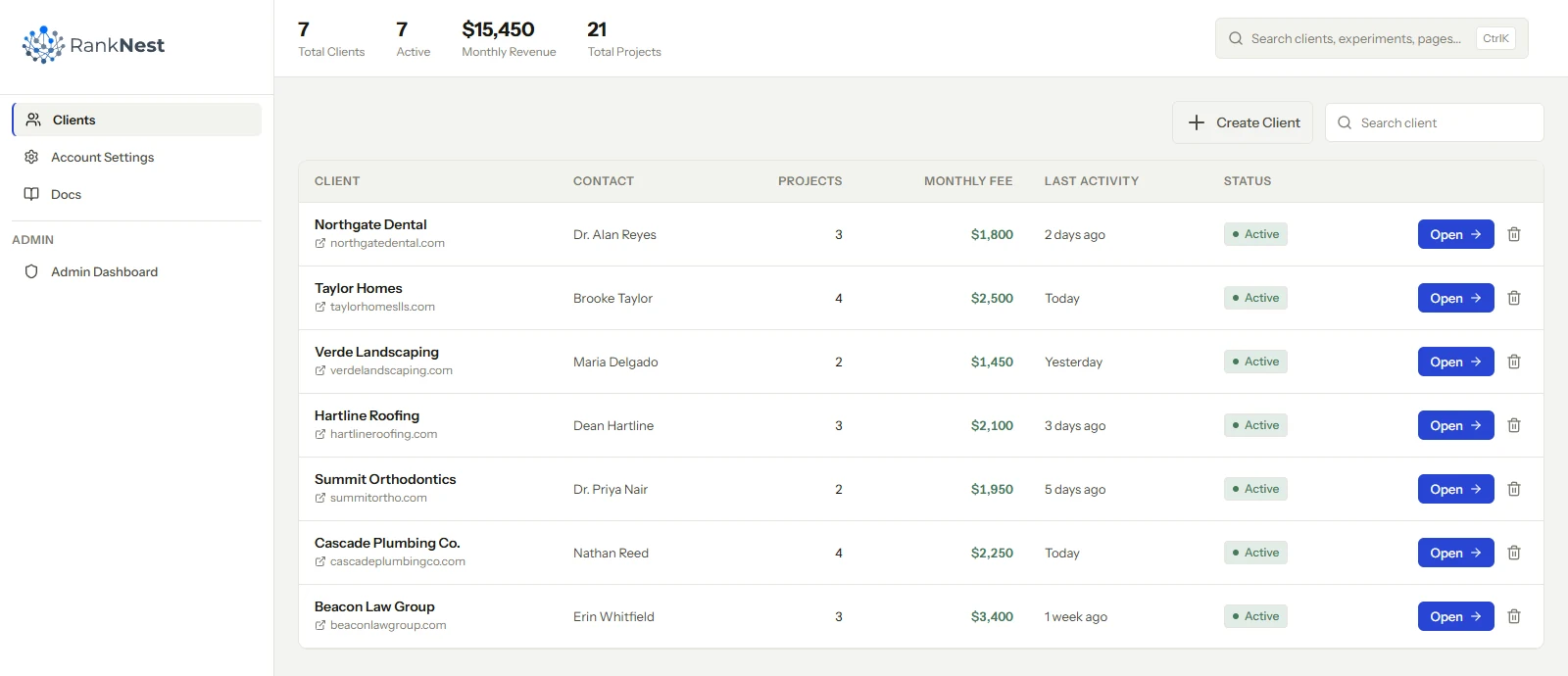

SEO client onboarding is everything that happens between a signed contract and the first delivered result. Run it as a fixed 14-day SOP. Collect access on days 1 and 2, snapshot the baseline, audit the site and its link structure, ship quick wins, then send the first report by day 14. After that first pass, the same audit work should move into a recurring cadence, which is laid out in our guide to running SEO audits across an entire client portfolio.
The deadline is the point. A new client's confidence peaks the day they sign and decays every quiet day after. An agency that ships something measurable inside two weeks starts the retainer with proof instead of promises.
This SOP is the onboarding piece of our full playbook for scaling SEO across multiple clients. It works for a solo freelancer, it works unchanged at 15 clients, and it works for an in-house SEO onboarding their own site, which has its own section below. That is exactly why it deserves to be written down.

Why onboarding needs a deadline
Most agencies treat onboarding as an open-ended discovery phase. Access trickles in over three weeks, the audit becomes a 60-page document nobody reads, and the first invoice arrives before the first result. Month-three churn is usually decided in month one.
A 14-day window forces sequencing. You collect access aggressively because day 3 depends on it. You scope the audit to what is actionable because day 10 depends on that. Every day has an owner and an output.
Before day 1: the sales-to-delivery handoff
The SOP assumes delivery knows what sales promised, and that assumption fails constantly in growing agencies. Before the clock starts, whoever closed the deal writes a one-page handoff. What the client was promised, what they were worried about, which numbers they care about, and any deadline they mentioned in passing. That handoff also gives you the starting context for SEO client reporting that proves causation, not correlation later.
Ten minutes of writing here prevents the classic month-two disaster, a delivery team optimizing for traffic while the client was sold leads. Every item in the handoff gets checked against the contract before the day 1 email goes out.
SEO onboarding for in-house teams
This sequence was written for agency work, and in-house SEOs inherit most of it unchanged. The audits, the baseline and the quick-win sprint are the same. Four things differ, and all four sit in the first two days.
There is no contract date, so pick one. An agency gets day 1 for free because somebody signed something. In-house onboarding drifts precisely because nothing marks the start. Choose a date, put the day 14 report in calendars, and treat it as externally imposed.
The sales handoff becomes stakeholder mapping. Instead of asking what the client was promised, write down who asked for SEO, who can veto a change, who owns the CMS, and who owns the roadmap that your changes have to fit into. The failure this prevents is the same one: optimising for traffic when the person funding the work wanted qualified leads.
Access is a ticket, not an email. Search Console and Analytics usually live with someone who has never met you, and internal access requests move slower than client ones, not faster. File on day 1 anyway. The audits cannot start without them.
Quick wins buy something different. An agency ships them to prove the retainer was worth signing. An in-house SEO ships them to earn roadmap priority from engineering, which means the day 14 report matters most to whoever approved the headcount, and the changes worth shipping first are the ones that need nobody else's sprint.
One thing gets more important in-house, not less. You will still be looking at this baseline in eighteen months, long after everyone has forgotten what the site looked like when you arrived. Agencies can lose a baseline and survive it. An in-house team cannot.
Day 1 to 2: Collect every access point
Access collection is the step most likely to blow the schedule, so it starts the day the contract is signed. Send one email with the full list, then chase it daily. Partial access means a partial baseline, and a partial baseline weakens every claim you make later.
What to collect.
- Google Search Console, owner or full access
- Google Analytics 4, editor access
- Google Business Profile, manager access to each location
- CMS login with permission to edit pages and templates
- Hosting or DNS access, or a named contact who has it
- Any prior SEO deliverables, past reports, keyword lists, disavow files
Six items, and the last one matters more than it looks. Prior reports tell you what the last agency promised, which tells you what this client was primed to expect.
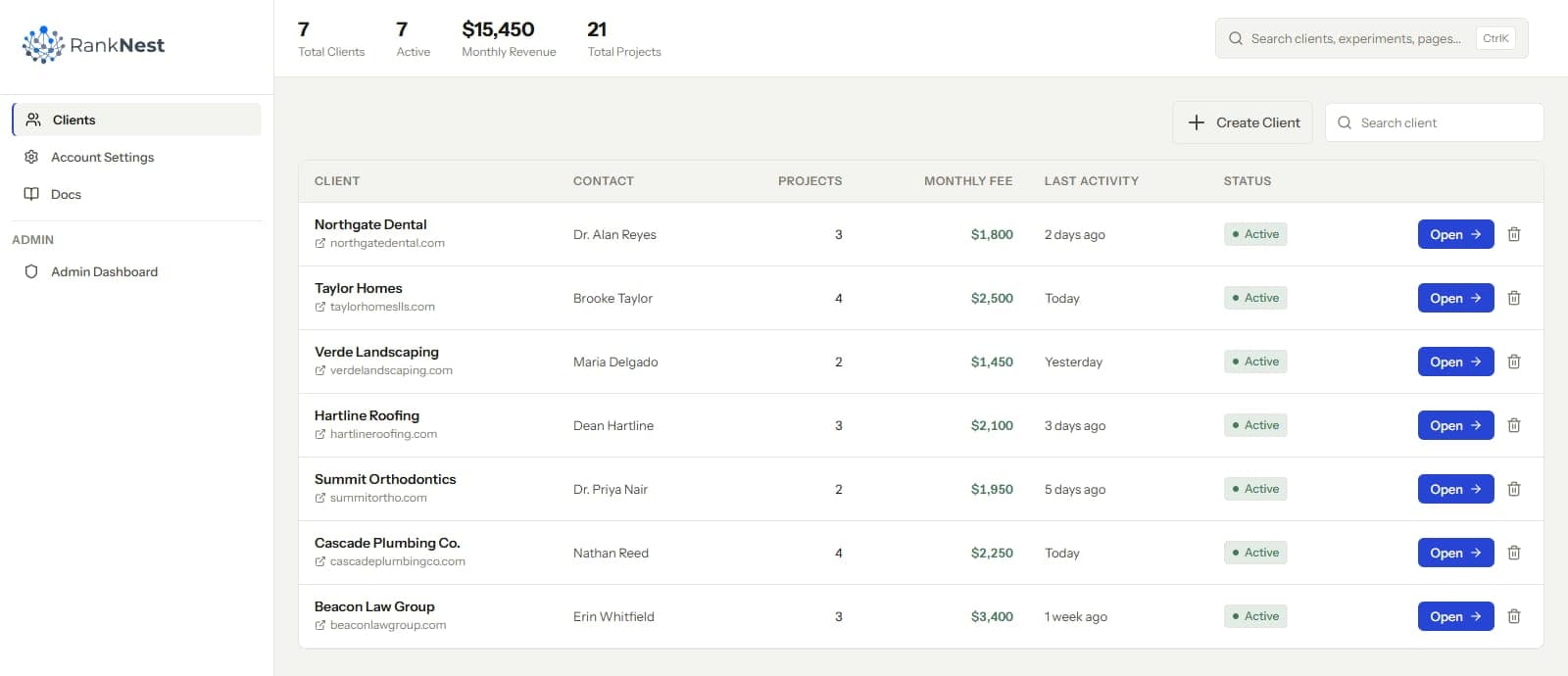
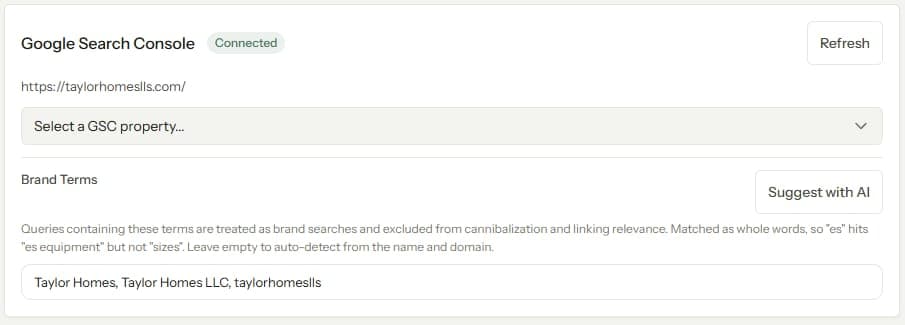
Set up the client's workspace the same day access lands. Connecting each account to a workspace tied to the right GSC property and GBP location once, at the start, means nobody on your team ever pulls data from the wrong property in month six.
Day 3 to 4: Snapshot the baseline
Before changing anything, freeze a picture of where the site stands. Every result you ever report will be measured against this snapshot, so make it boring and complete.
Record these numbers with a date on them.
- GSC clicks, impressions, average position for the trailing 12 months
- Top 50 queries and top 50 pages by clicks
- Count of indexed pages
- GBP calls, direction requests, and website clicks per location
- Conversions or leads as the client currently measures them
Also record revenue context. Ask what an average customer is worth and write the number down in the workspace. When you later report 30 extra clicks on a service page, that number turns clicks into a dollar estimate the client's CFO can read.
Day 5 to 7: Run the technical audit
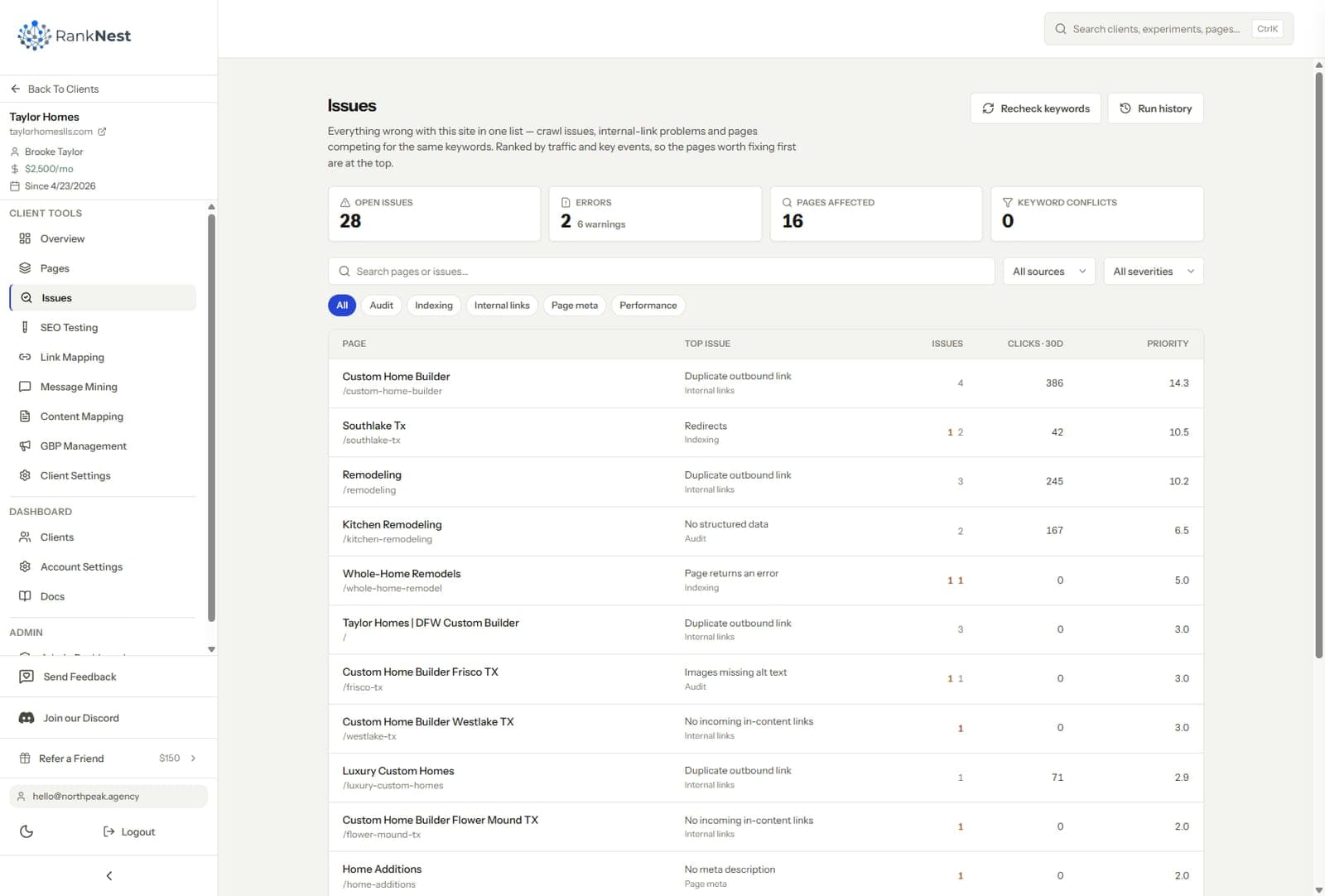
Now crawl the site. A technical site audit should cover status codes, indexability, meta tags, redirects, response times, and schema. That six-item list is what we built the RankNest crawler around, and any auditor that covers it will serve. On a typical SMB site of a few hundred pages, expect the crawl itself to be fast and the reading of it to take a morning.
Resist the 60-page audit document. The onboarding audit has one job, to sort findings into three buckets. Fix this week, fix this quarter, and note for later. A client-facing audit is a prioritized to-do list with reasons, anything longer is theater.
Common day-5 finds on inherited sites include redirect chains from an old migration, orphaned service pages, and title tags duplicated across locations. Any of these can seed the quick-win list for days 10 to 12.
Day 8 to 9: Audit the link structure
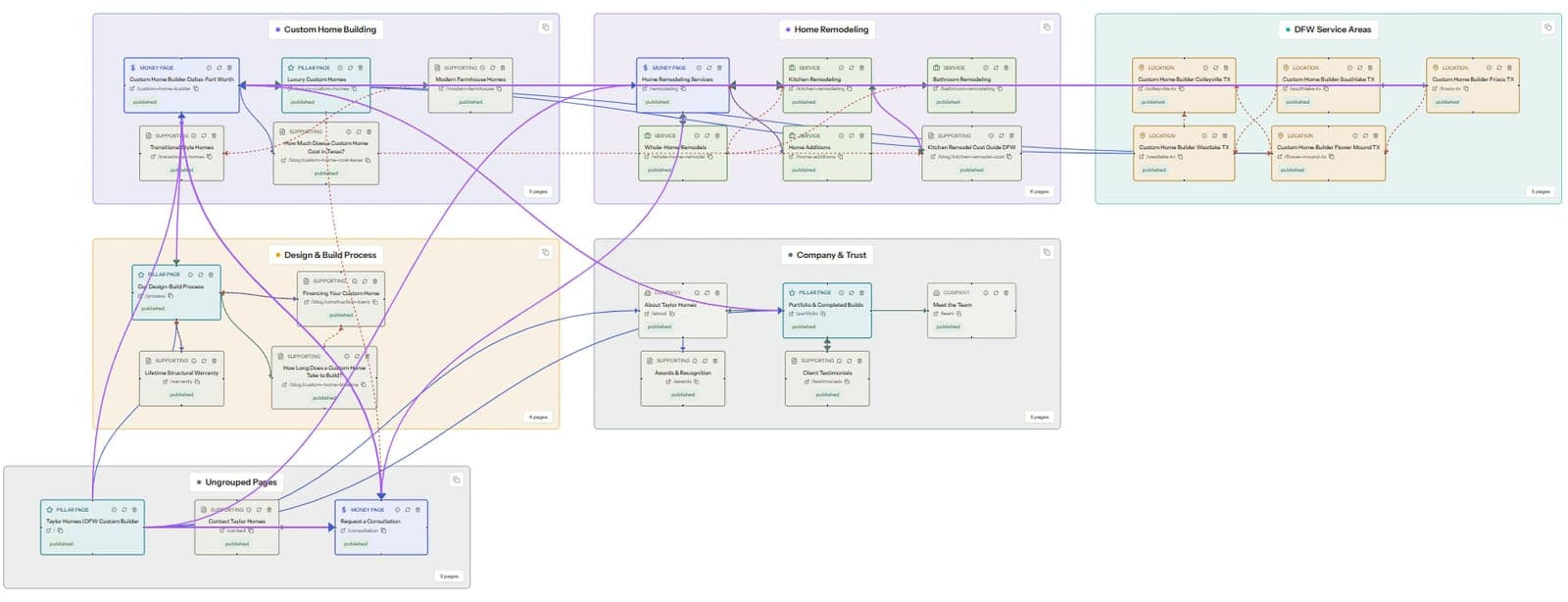
Technical health and link structure are different audits. A site can crawl clean and still bury its money pages five clicks deep. Days 8 and 9 go to mapping how authority actually flows around the site.
The full process is in our guide to auditing a website's internal link structure, and the short version fits in two days. Find orphaned pages, measure click depth to the pages that make money, and check which anchors point at them. Then look at the site as a graph rather than a list, our internal link mapping guide covers how to read hubs, orphans, and dead ends visually.
For onboarding purposes you want one output, a shortlist of internal links to add this month, ranked by the value of the target page. That shortlist becomes part of the day 10 to 12 work and the first monthly deliverable after it.
Day 10 to 12: Ship the quick wins
Three days of pure execution. Pull from the two audits and ship the changes that need no client approval, no budget, and no developer.
The usual candidates, in rough order of frequency.
- Rewrite title tags on pages ranking positions 5 to 15 for commercial queries
- Add the internal link shortlist from day 9
- Fix broken redirects and any 404s with inbound links
- Clean up GBP categories, services, and hours
- Add missing schema on the highest-value pages
Log every change with a date. The point of onboarding week two is creating attributable before-and-after pairs, and an undated change can never be attributed to anything.
Day 13 to 14: Send the first report and set expectations
The first report is short and structured in three parts. What we found, what we already changed, what happens next month. Attach the baseline snapshot so the client sees the starting line you will both measure from. What belongs in that report, and what belongs on a screen they can open themselves, is covered in our comparison of SEO client dashboards.
Day 14 is also the moment to set testing expectations, because it never gets easier than now. Tell the client the operating model in plain words. We make changes, we measure each one against the baseline, and some changes will not work. A client told this on day 14 reads month-four results as evidence, a client never told this reads them as excuses.
The copyable 14-day onboarding checklist
- Day 1, send the access request email, all six items
- Day 2, confirm GSC, GA4, GBP, and CMS access, chase gaps
- Day 2, create the client workspace, connect GSC property and GBP location
- Day 3, freeze the GSC baseline, 12 months of clicks, impressions, position
- Day 3, export top 50 queries and top 50 pages
- Day 4, record GBP metrics, conversion numbers, and customer value
- Day 5, run the technical crawl
- Day 6 to 7, triage findings into now, this quarter, later
- Day 8, find orphan pages and measure click depth to money pages
- Day 9, build the ranked internal link shortlist
- Day 10 to 12, ship quick wins, log every change with a date
- Day 13, draft the first report, found, changed, next
- Day 14, deliver the report, walk through the testing expectations
Copy it, adapt the day numbers to your team size, and stop reinventing it per client.
Onboarding mistakes that cause month-three churn
Most churn that lands in month three was set up in weeks one and two. These are the patterns we see most.
- Starting keyword research before access lands, which produces strategy with no baseline under it
- Shipping the 60-page audit as the first deliverable, clients read it as homework rather than progress
- Promising rankings on a timeline during onboarding, then owning a clock you cannot control
- Skipping the revenue context conversation, so every future report argues in clicks instead of dollars
- Leaving testing expectations unsaid until the first flat month, when the same words sound defensive
There is a sixth mistake that outranks the rest, treating onboarding as a one-time project to survive rather than an SOP to refine. The agency running this sequence for the tenth time ships better week-one work than the agency improvising it, at half the hours. That gap widens with every new client.
FAQ
How long should SEO client onboarding take?
Two weeks from contract to first delivered result is a realistic standard for SMB clients. Access collection is the only step that regularly threatens the deadline, which is why it starts on day 1 with daily follow-up. Enterprise clients with change-approval processes need longer, but the sequence stays the same.
What access do you need from a new SEO client?
Google Search Console, GA4, Google Business Profile, and CMS access cover most delivery work. Hosting or DNS access matters when technical fixes go beyond the CMS. Always ask for prior SEO reports too, they reveal what the client was previously promised.
What should a new SEO client checklist include?
Access collection, a dated baseline snapshot, a technical audit, an internal link structure audit, a quick-win sprint, and a first report with expectations set for testing. Each item needs an owner and a day number. A checklist without dates is a wish list.
What is a good first win for a new SEO client?
Title tag rewrites on pages already ranking positions 5 to 15 are the most reliable, since small position gains there produce visible click changes within weeks. Internal links pointed at an underlinked money page are a close second. Both are fast, free, and measurable against the baseline.
Why take a baseline snapshot before starting SEO work?
Every future claim of progress needs a before. A dated baseline of clicks, impressions, positions, and conversions lets you attribute specific outcomes to specific changes. Skip it and month-six reporting becomes hand-waving over a trend line.
Does SEO onboarding work the same way for in-house teams?
The audits, the baseline and the quick-win sprint are identical. Four things differ, and all four sit in the first two days: there is no contract date so you have to choose a start date yourself, the sales handoff is replaced by stakeholder mapping, access arrives through an internal ticket rather than a client email, and the quick wins are spent earning roadmap priority instead of proving a retainer.