Playbooks and teardowns from agencies running SEO at scale.
Or skip the reading: a free crawl of your site, no account needed.
25 articles
The main alternatives to SEOTesting are RankNest, SearchPilot, Semrush Enterprise, SEO Gets, SE Ranking, and a manual Search Console and Looker Studio setup. The right choice depends on how many properties you manage, whether testing is the primary job, and whether the site can support true split testing.
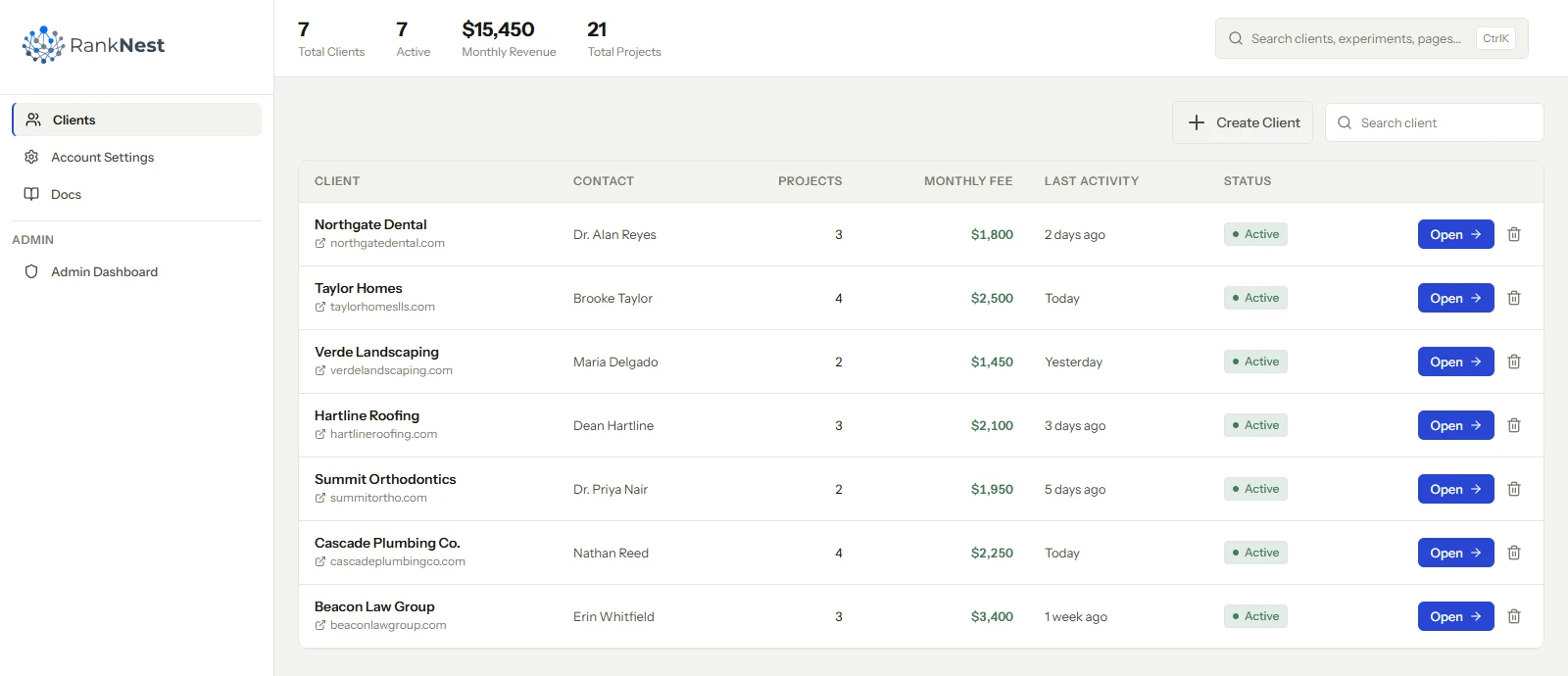
An SEO client dashboard is one screen per client showing search performance, the work in progress, and what changed since the last report. AgencyAnalytics is the cheapest route to a branded client login at $20 per client per month. Databox, DashThis and Whatagraph solve the same job at higher prices, Looker Studio does it free if you build it, and RankNest holds the work and the data together instead of exposing a client portal.
The main Raven Tools alternatives for agencies are AgencyAnalytics for client reporting, SE Ranking for SEO depth, SEO Gets for unlimited Search Console properties, Looker Studio for free custom dashboards, and RankNest for SEO execution. Choice depends on client count, user seats, and whether the need is reporting or execution.
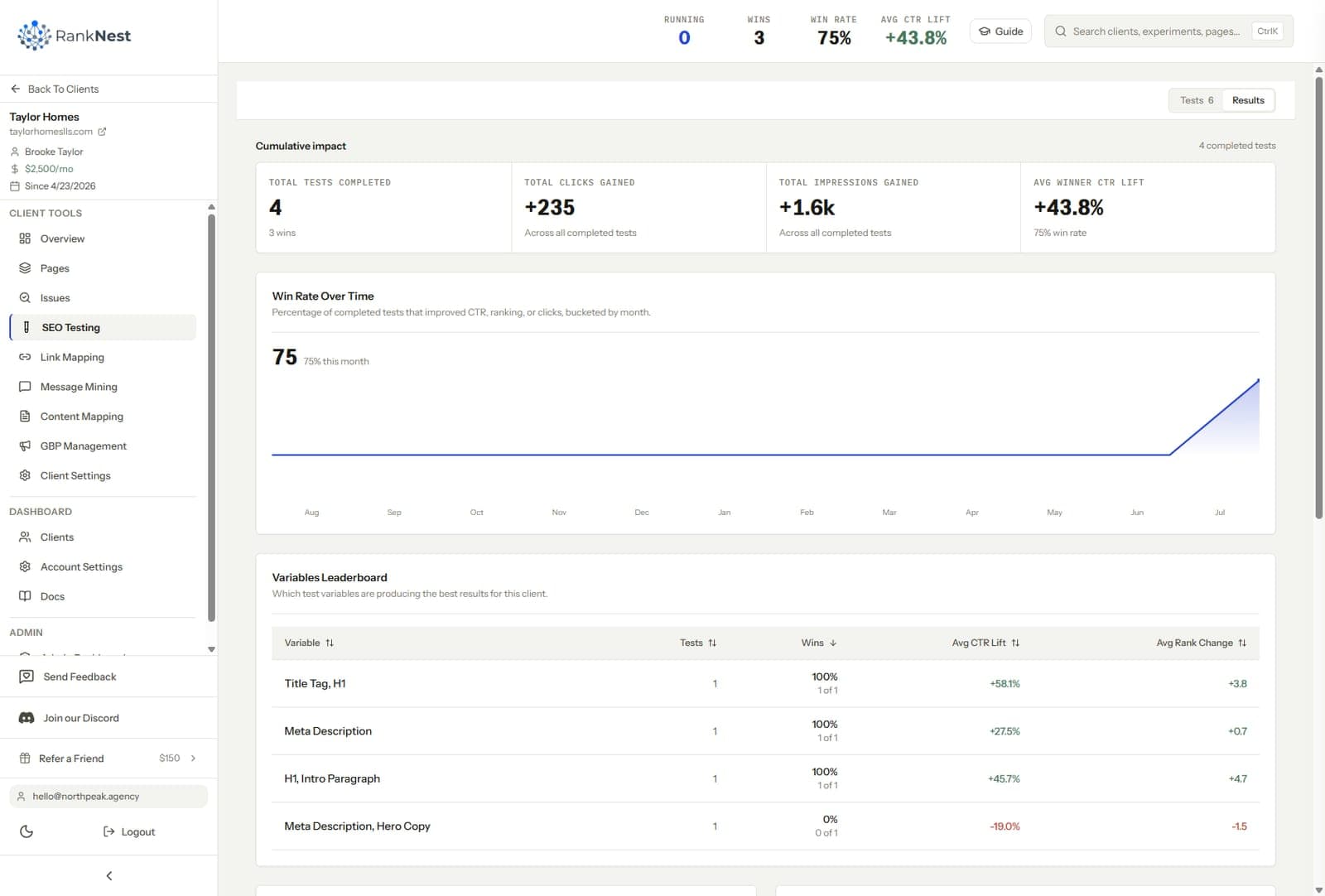
Small sites cannot run SEO split tests, which need hundreds of similar pages, so the right method is time-based before/after testing. You snapshot a page's Google Search Console performance, make one change, then compare matched windows against the site-wide trend. It works on sites of any size, including 30-page local businesses, as long as you use longer windows and annotate confounds like seasonality and algorithm updates.
The best SEO tests on client sites are single, reversible changes measured against a Google Search Console baseline, starting with title tags, meta descriptions, and internal links before moving to content and technical work. This list gives you 25 test ideas sorted by effort and risk, each with a hypothesis, a measurement plan, an expected timeline, and a one-line client pitch.
Yes, you can test internal links, though rarely as a classic A/B split. The practical method is a time-based before-and-after experiment. Set a GSC baseline for a target page, add internal links to it from related pages in one batch, then measure the change in position, impressions, and clicks. Internal links suit testing unusually well because the change is controlled, cheap, and reversible.
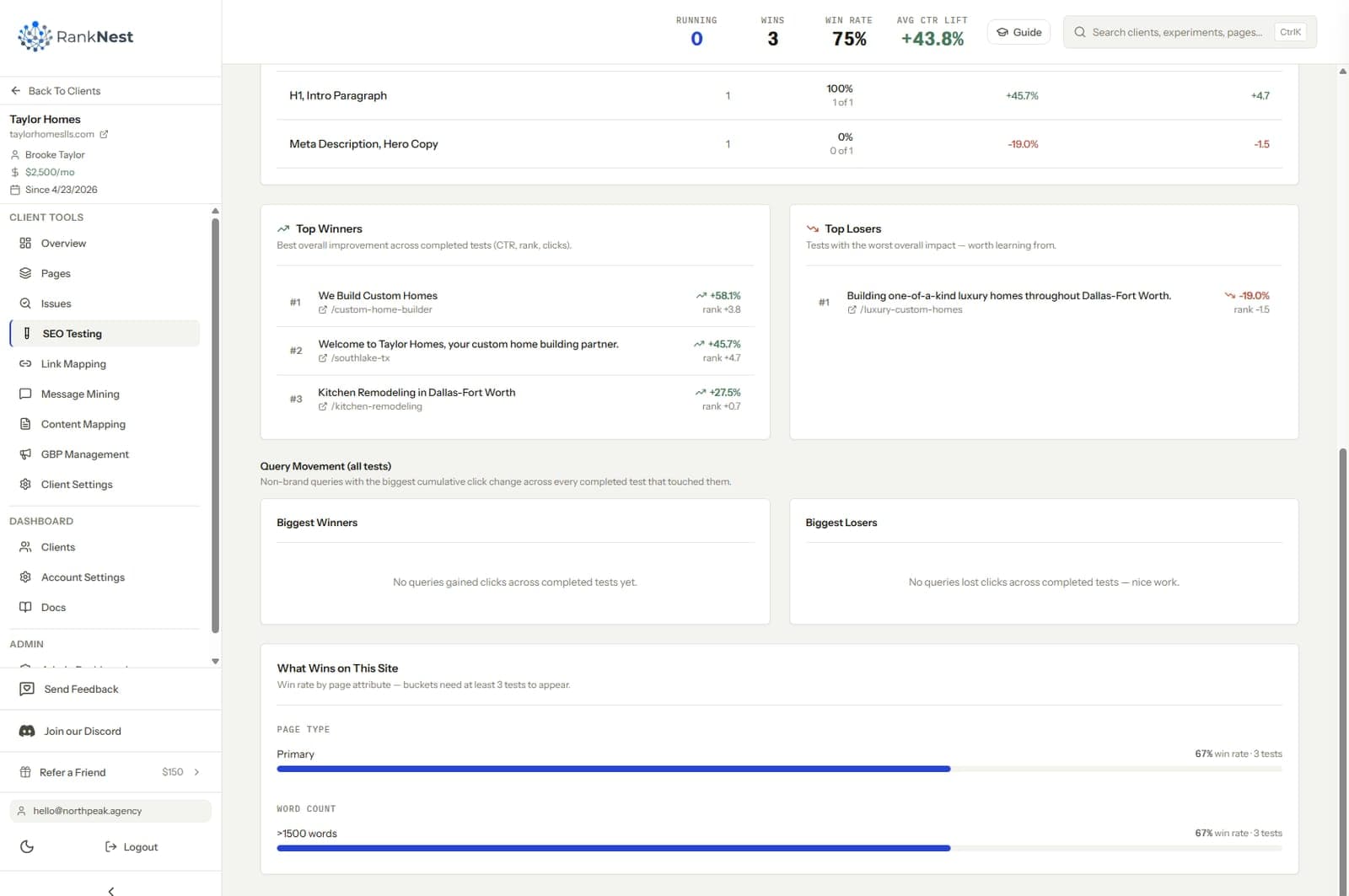
Strong SEO client reporting is a narrative of changes made and measured, structured in three parts, what we changed, what happened, and what happens next. Dashboards show that metrics moved, a report has to show why they moved, tying each delta to a dated change. Agencies that report causation keep clients through flat months, because the work stays visible even when the graph does not cooperate.
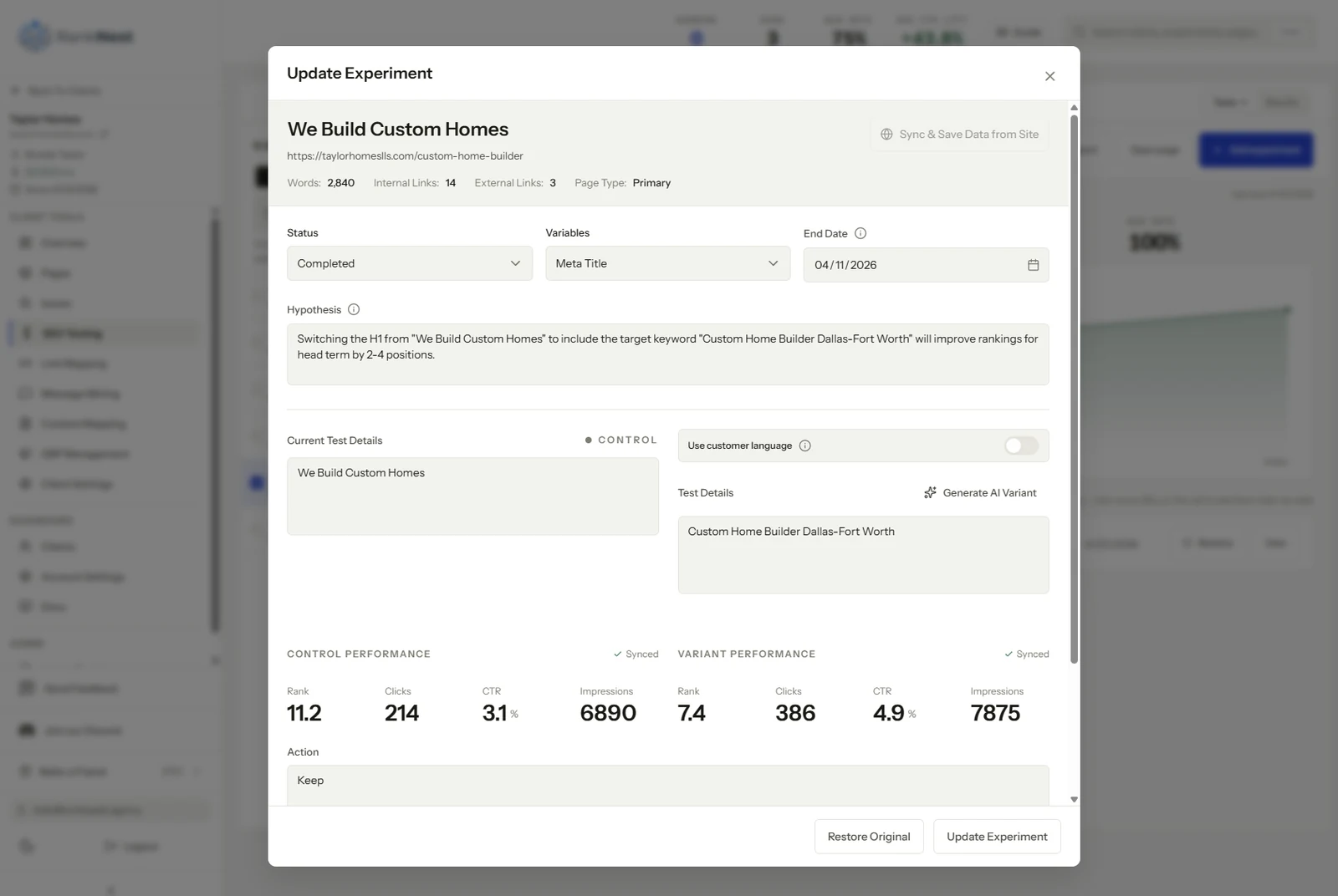
Proving SEO ROI to clients means showing causation, a specific change you made, the measured before/after effect, and what that effect is worth in the client's own revenue terms. Dashboards cannot do this, because a traffic graph shows correlation at best and says nothing about what caused the movement. Agencies that log each change as an experiment against a Google Search Console baseline can attribute results change by change, which is the evidence that survives renewal conversations.
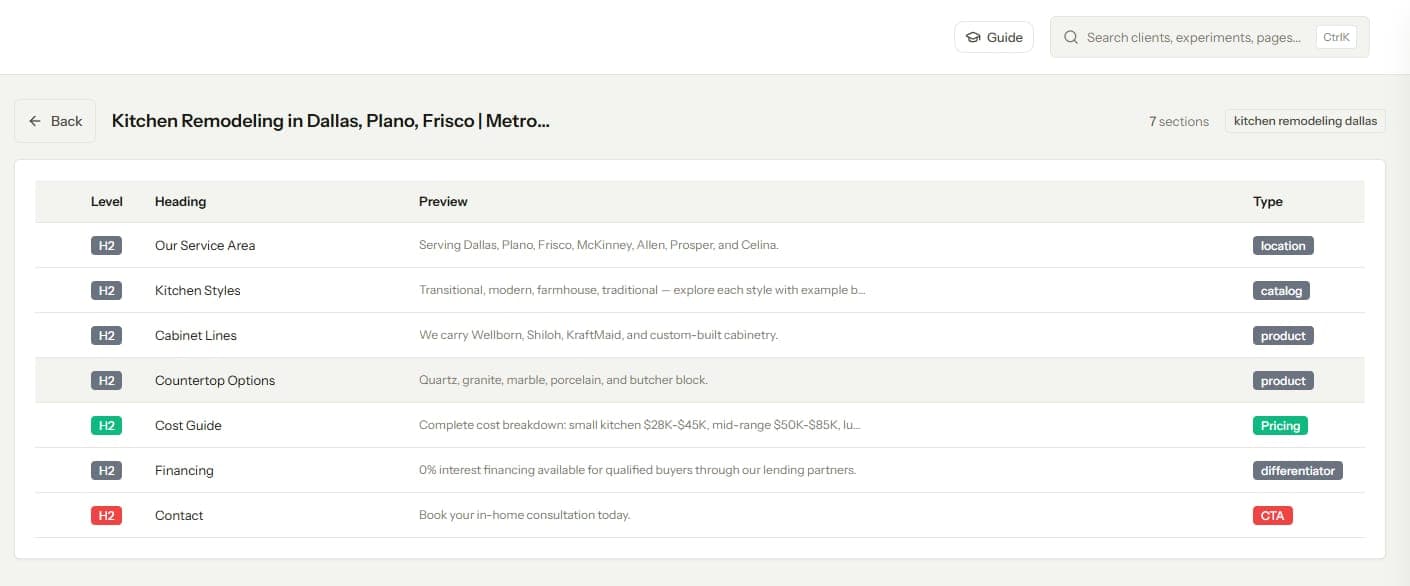
Content mapping is planning the pages a site needs before writing them, organized into topic clusters with a pillar page and supporting posts. The step most cluster strategies skip is the linking plan, deciding every internal link, source, target, and anchor, before a word gets drafted. This guide covers planning clusters from competitor outlines, choosing pillars, and writing the link plan first.
An internal link audit checks every page's inbound and outbound links for orphans, dead ends, broken links, redirect chains, and weak anchor text. Across a 20-client roster, the only version that survives is a fixed cadence, a short monthly delta check plus a deeper quarterly pass, with fixes prioritized by traffic value instead of issue count.